
The ED officer will carry the latest charge sheet filed by the agency against Modi's wife Ami and the recent attachments made by it in the case.
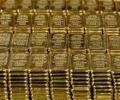
Gold rebounds after 3-day fall on renewed demand, global cues.

It's day 14th of the jewellers and bullion traders' strike and there are no signs of roll back from the government. The industry is also determined, and has called for an indefinite strike.
Indian gold imports, which fell last week as world prices rose, are likely to pick up as jewellers replenish stocks to meet local demand during the marriage season, traders said on Monday.

While gold spurted by Rs 220 to Rs 30,520 per 10 grams, silver shot up by Rs 1,000 to Rs 54,000 per kg on increased offtake by jewellers and industrial units.

The month of March could be worst in many years, with imports estimated only around 18 tonnes amid the coronavirus pandemic and the nationwide lockdown, said an industry player. The import in March 2019 was 72.5 tonnes, according to the GFMS data.

Consumers during the quarter sold 37.9 tonnes of old gold, which is the highest quarterly sale after September 2016, when old gold sale, or scrap supply, was 39 tonnes.
While gem and jewellery exports have slowed in recent months, the escalating dollar value has put diamantaires in a problem on payments against import of rough diamonds.

Gold demand in rural India is expected to be lower this year with weak monsoon affecting household savings, according to the World Gold Council (WGC).

Traders said sustained buying by stockists and jewellery fabricators for the ongoing marriage season mainly led to an upward trend in gold prices.

Since he lives locally, Harish Patel is one of the luckier migrant workers in Surat - in that his employer was able to squeeze in a single shift for him at the weaving unit in Kamrej in Gujarat - unlike others who went home for Holi and other festivals just as the second wave of the Covid-19 pandemic was waxing and ended up stranded in local lockdowns.

Silver ready rose by Rs 350 to Rs 33,850 per kg.
Coming down heavily on top guns in the diamond trade in the country, Gujarat Chief Minister Narendra Modi on Friday warned key players that workers engaged in manufacturing gems and jewellery cannot be left in the lurch in the current global recession.

Banks cannot function as traders of commodities, including gold, RBI chief general manager (communication) Mumbai Alpana Killawala told PTI over phone when asked about the reason behind the policy.
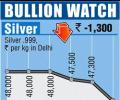
Silver also plunged by Rs 1,300 to Rs 46,000 per kg on poor offtake by jewellery fabricators and industrial units.
"Demand for gold is virtually zero," said Suresh Hundia, president of the Bombay Bullion Association. "People are taking profits and selling their gold back to jewellers for 2.5-3 per cent less than international market prices."
Gold purchases by India, the world's largest importer of the metal, are down to a trickle because of high prices, prompting local traders and jewellers to reprocess scrap and jewellery to cater to rapidly falling local demand.

Imports are down also because local traders are clearing unaccounted stock after introduction of 1 per cent excise duty

Real reason for crashing gold prices is not Trump victory, says expert.
"Despite the marriage season being on, almost all gold ornament shops have reported a sharp fall in their sales," said P Satya Narayan Senapati, president, Berhampur Jewellery Association. At the peak of the marriage season, the gold trade in Behrampur reached around Rs 1 crore (Rs 10 million) per day earlier. Given the uptrend and volatility in the price of gold, there is scanty demand for the yellow metal and only need-based buying by the customers.

Gold prices maintained an upward march for the third consecutive day by rising Rs 290 to Rs 30,490 per ten grams in the national capital on sustained buying by stockists amid a firm global trend.

The concept of gold as an asset capable of getting anytime money is evaporating.

Global gold prices held below $1,200 an ounce this week.

Retail jewellers may be exempted as customers are allowed to buy jewellery up to Rs 200,000 in cash
Gold prices in India soared to record highs on Thursday, prompting many people in the world's largest bullion consumer to sell old stock, traders said.

"Not a single step has been taken by this government to empower small businesses in India," says Praveen Khandelwal, national secretary general of the Confederation of All India Traders and former treasurer of the Bharatiya Janata Party's Delhi unit.

Silver also turned weak and dropped by Rs 350 to Rs 41,200 per kg on reduced offtake by industrial units and coin makers.

Despite the freeze on diplomatic ties between India and Pakistan and protests against the fair, traders at the recently concluded four-day Aalishan Pakistan exhibition did brisk business, reports Upasna Pandey.
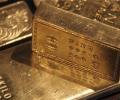
Price up on weak dollar and strong demand
India, the world's largest gold consumer, is likely to resume import of the precious metal this week after a long lull, as global prices have fallen sharply amid signs the United States is unlikely to attack Iraq immediately.
Decades apart, but the drama linked to the two appears similar, says Nivedita Mookerji.

Globally, gold added 0.4 per cent to $1,228.65 an ounce in Singapore.

The department has found that Rs 100 crore were deposited in 500 Jan Dhan accounts in the banks in western Madhya Pradesh post-demonetisation.

Silver has a dual role - 60 per cent of the total silver produced is used for industrial purposes in the electrical & electronics segment and photovoltaic demand mostly for solar panels.

In the second of a six-part series, Sanjay Jog of Business Standard walks across the streets of Indore to find out how it has been hit by demonetisation.

Bombay Bullion Association to develop a software for the same.

Silver, however, recovered by Rs 50 to Rs 36,800 per kg

The ED has claimed that Nirav Modi had refused to join the probe despite acknowledging mails and summons issued to him and that he doesn't want to return to India.

Bullion traders said sustained buying by jewellery fabricators and retailers to meet the festive season demand mainly kept precious metal prices higher.
